10 Weeks Until TC Marathon

Marathon training is slowly taking over my life, and eight weeks into the work, I thought it would be good idea to set a time aside at the end of the week to recap my workouts. I’ve been really putting in the effort this cycle, and I want to celebrate my accomplishments but also look at the lessons learned and apply those in the upcoming training week. It probably would have made sense to start writing recaps at the beginning of my training, but I guess I just didn’t think of it, and because it’s never too late, we are starting here, at week eight of training.

First, let’s talk about the race – the Medtronic Twin Cities Marathon. I live in Chicago, home to one of the acclaimed majors, which I’ve run, but decided to tackle my third marathon in another state. This was partly because Chicago’s lottery opens in November, and at that time, I was still easing back into running after nearly a year off recovering from a hip surgery, so I couldn’t commit to the marathon. The other part is that I really wanted to run the Twin Cities Marathon. I am from South Dakota and grew up in a devoted Minnesota Twins family, so we made many trips to The Cities as kids. In college, we often took random trips there to shop or go to concerts, and now my brother lives there and it’s a good meeting spot for us and our South Dakota family.

When I started getting healthier and stronger and I realized that I could definitely do another marathon, I did not hesitate in registering for the TC race. Because many Chicago runners have to find alternative races in they can’t get into our city’s marathon, many have run the TC Marathon, and they ALWAYS have great things to say about it. Some of my family will be there, and it promises to be a gorgeous race. Plus, it’s the week before Chicago, so I can run there and then be home to cheer on friends and teammates.

Anyway, let’s look at this week’s training:

Weeks to Marathon: 10
Miles: 38.7
Goals: This was a cutback week, so my goal was to bring down my mileage (from 43 the week before) and concentrate on rest and recovery. This meant lots of naps between runs and work, and a full rest day in which I barely left my apartment, but they helped. I am still tired at the end of this week, but it’s not the same kind of desperate exhaustion that I felt last week.

Monday: Shakeout – 5 miles – Nothing special here, just doing the easy miles. One thing that I did really great this week was slowing down my easier runs. I’ve been known to go too hard on recovery days, so putting my watch on the HR setting and keep it in the green has helped me slow down a bit.

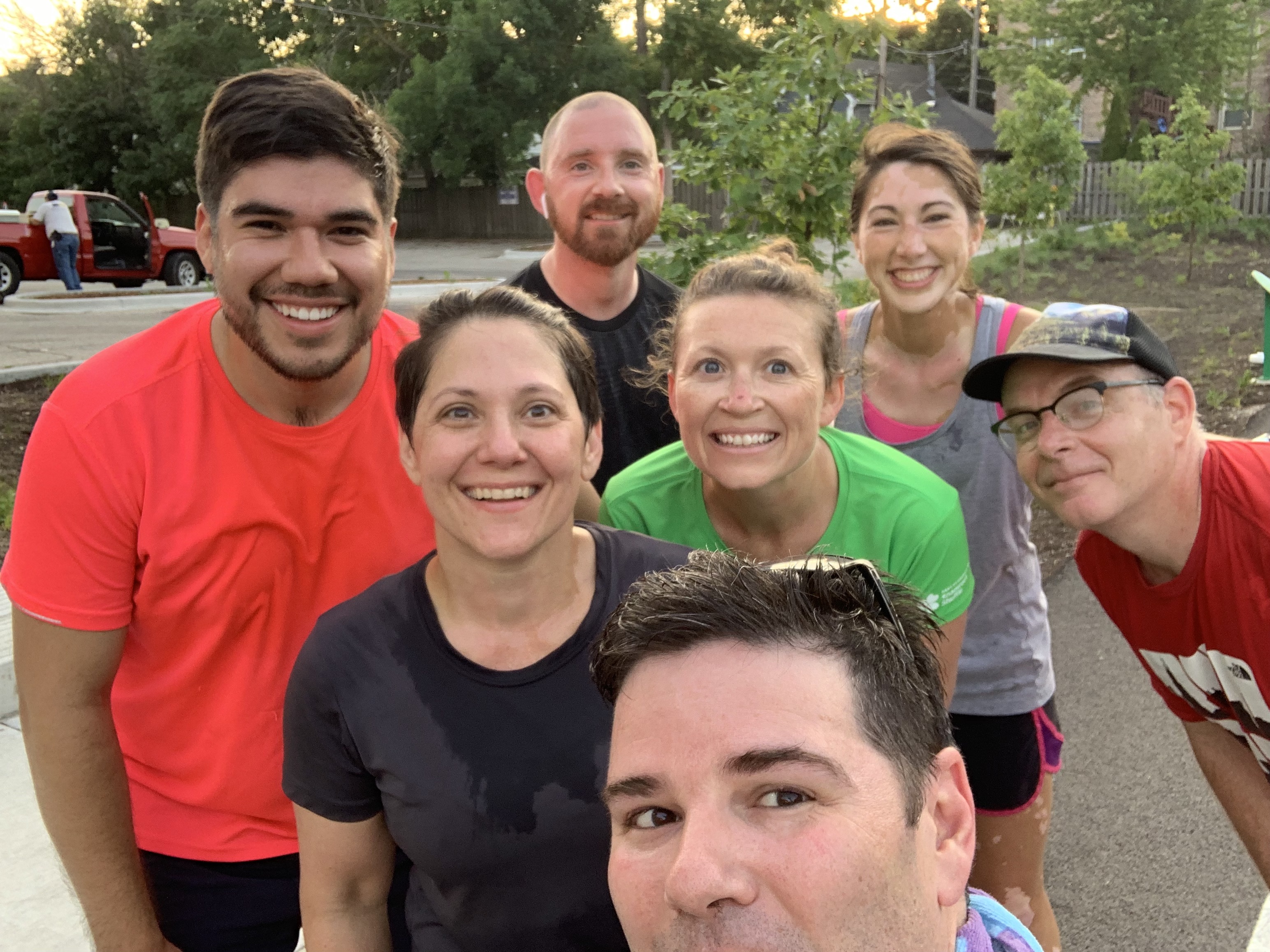
Tuesday: Tempo with a friend 6 (2 WU, 3 tempo, 2 CD) – I did these with a CES friend around mid-day. We tried to keep them between 8:45-8:30, and it was a struggle, but we got them in. It was nice to have someone push me on these tempo runs and make me want to go faster.

Wednesday: Rest

Thursday: Neighborhood Group Run – 9 miles – This was supposed to be six but it turned into 9, and I was OK with it. Because I was committed to cutting back, this longer run meant that I needed to adjust the rest of the week’s runs, but it was worth it to run with some pretty fast badass women.

Friday: Fartleks – 3.6 miles – I did half of these at a mini track (.10 distance) and the other half on the street. At one point, I saw 5:45 on my watch, which seems impossible but also not. This was also the workout in which I joined the #SportsBraSquad. I did some strength work after that made my glutes hurt for days.

Saturday: Easy miles with Neighborhood Running Group – 3 miles – I went slooooooww, but I knew that my legs needed it.

Sunday: Long Run with Training Team – 11 miles – I woke up for this workout hating running and wanting to quit, but I did not. I made myself eat a bagel, get in my car and drive, and keep running that first painful mile, But, by mile five or so, I was feeling great. This ended up being a great run. I did try to experiment with salt tabs, but I didn’t take it with another water and got a mouth full of salt. Something to try for next week.

Next week’s goals: I’m increasing my mileage and a bit worried about fitting runs in with two jobs and a final. My goal this week is time management and making sure I get enough rest.
I Joined the #SportsBraSquad

Almost every woman I know, runner or not, has had a difficult relationship with their body. They have starved it, overexercised it, shamed it, cried tears over it, and wanted it to be different.

Of course, I am no different. I was first called fat at the age 8, and from there on out, I believed that statement to be true. I started running in middle school because the sport seemed harder than others, but I quickly learned that I didn’t have the typical “runner’s body.” In high school, I was one of the slower runners on the team, but I was also the biggest. At a cross country camp, the head coach said that sometimes big girls win races too, and he looked right at me.

For many years, running was a tool to get to a thinner version of myself. Whether it was running multiple times a day to increase the number of calories out or jogging to deserted alleys to throw up that night’s dinner, I thought that if I just kept moving I would eventually lose the weight and find comfort in my body.

While I was a Peace Corps volunteer in Lesotho, I trained for and ran the Two Oceans Ultramarathon in Cape Town, South Africa. The race is 56 kilometers (roughly 35 miles), and when I registered for the race, I had not run more than a half marathon. For six months, I got up with the roosters (literally, those damn things woke me up every morning) and ran. Lesotho is extremely hilly and so my legs learned to endure the ups and downs of the foothills of the Maluti Mountains. Initially, I wanted to do the race because I had gained a considerable amount of weight in my service, and I couldn’t go home after two years in Africa fatter than when I arrived. (I know that is very shallow, but disordered eating and body image can warp your priorities). I tried to cutback on calories while running 50 miles a week, and soon I realized that it couldn’t be done. If I was going to run this monster of a race—something many people did not think I could do—I was going to have to work with my body, not against it.

While my body and I came together for that race, our years of feuding didn’t exactly end. I came back to the U.S., returned to my normal weight, and ran another marathon, but still resented my body for not being fitter, faster, and smaller. I gave up drinking for an entire year, went on juice cleanses and elimination diets, and joined fancy gyms in hopes of finally shaping my body into something I could be proud of, but it could never get there. I even lost eight pounds the month before my wedding (by eating only black beans and broccoli), and still I wasn’t satisfied. Eventually, I resigned to the fact that I may never like my body.

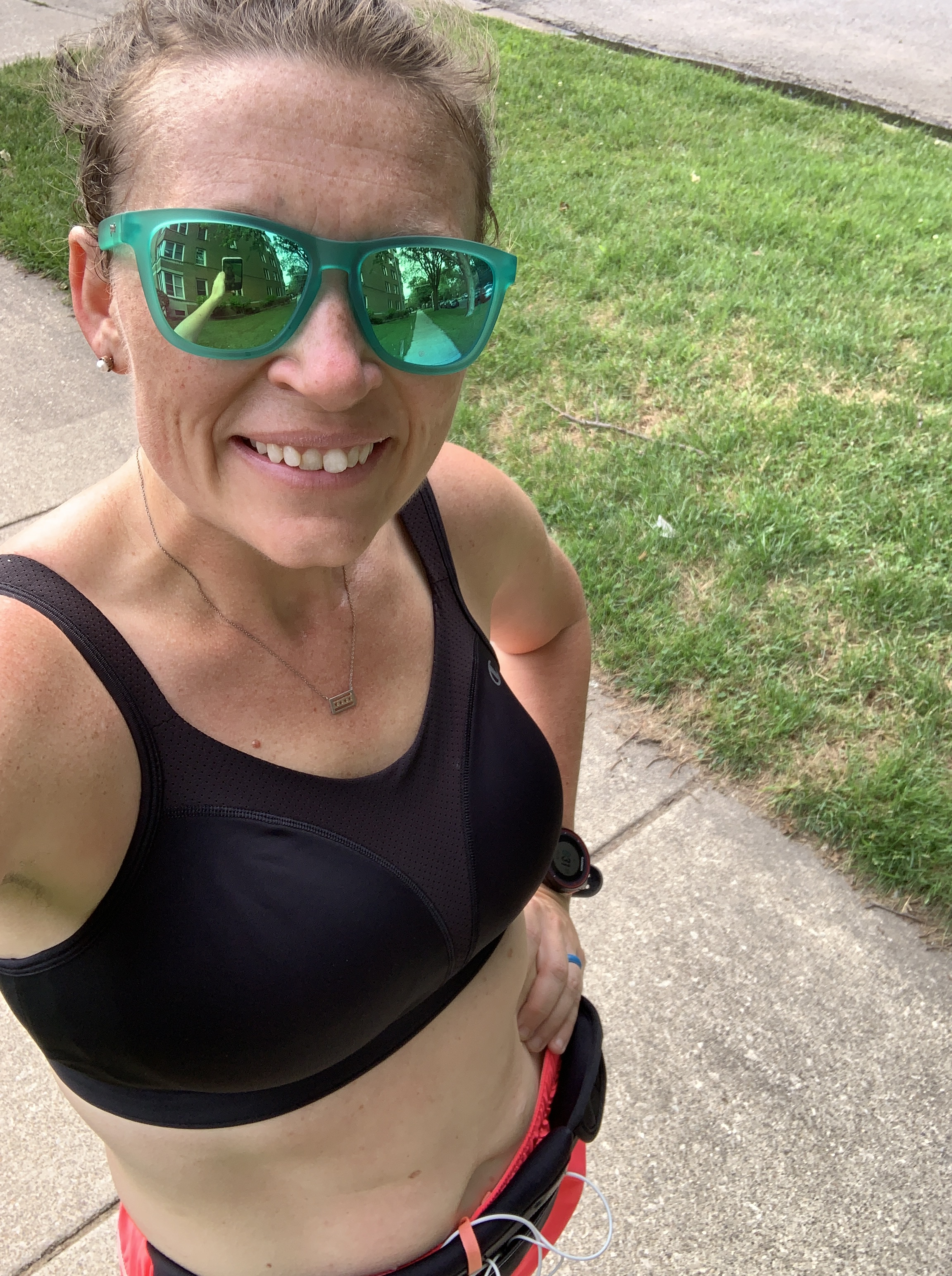
I am almost didn’t put this picture in because my stomach is rounder, but you know what, that’s just the shape of my stomach.

A few weeks ago, I found the #SportsBraSquad. This movement was started by Kelly Roberts, who is an all-around bad ass. One day, Kelly was running through the sweltering heat of New York and wanted to take off her tank top. Like myself, Kelly thought that only those with typical runner bodies had the privilege of running in their sports bras and that she didn’t belong in that group. She was fearful that if she did take off her shirt, and run only in her bra, that people would judge her and remark that her body shouldn’t be seen in public. However, the heat was too much for her, and she said screw it. Off with the shirt.

Kelly’s defiance against the stereotypical running body started a global movement. Woman of all shapes and sizes are throwing off their shirts and running in their bras because why the heck not. If men can run without shirts and thinner women in their sports bras, all women should be able to embrace the shirtless run. It’s an empowering statement, and I love scrolling through the hashtag to see women loving their bodies and putting it all on display.

“That’s so great of them,” I thought. “But I don’t think that I could ever do that.”

I assumed I wasn’t brave enough, or that people would really judge me. Any time I thought about baring it, I came up with an excuse: my bra is really old, I want to wait for a hotter day, or my route today will take me along a busy road, which may be too much. I wanted to join the #SportsBraSquad in theory, but I had a million reasons why I specifically couldn’t do it.

Yesterday, fartleks were on the schedule, and I planned to do them at the track before joining a few runners for a cool down. It wasn’t specifically hot nor was I going far enough to feel extra toasty. But, when I was getting dressed for my workout, I decided not to put on a tank top. This was not a premeditated act, and I didn’t feel a surge of courage or pride, rather, I simply decided to run in my sports bra. Two weeks ago, the thought of running in my bra was scary and unattainable, but yesterday, I approached my running attire with the same attitude as picking out what flavor of Nuun to drink after my run — it simply didn’t matter.

Outside, insecurities did creep in. I imagined what others must be thinking as they saw me bounce by, “Oh, a woman that size needs to wear a shirt.” Or, when my friends joined me halfway through, I wondered if they were a bit taken back, or appalled, at my unclothed stomach. These worries didn’t last long, though, because they were just thoughts. I was more focused on doing my hard workout and using my body to go harder that what it looked like.

A friend caught a quick video of me pushing through a speed set and posted it to Instagram. “Of all the days,” I thought, and I was nervous to see the video, knowing that my instinct would be to pick apart my shape and find new reasons to hate it. That didn’t happen. When I saw the video, I just saw myself pushing my pace. I didn’t have the same abs or leg muscles as some athletes, but I sure looked like a runner in that video. Maybe that perception of a “real runner’s body” doesn’t exist, or it does and it doesn’t matter.

In less than two months, I will be running my third marathon, and there will be a few points during that 26.2 miles when my body and mind will not agree, and one will likely falter. In order to get me to the finish line, though, they will have to come together and work as one. It’s a major step forward in my training when I can simply decide to run in my sports bra, and it not feel like a monumental thing. It means that I have put more focus on what my body can do and how it feels than what it looks like. Am I now fully in love with my body and an example of body positivity? Probably not, but I do understand that I must appreciate my body and not work so hard against it. To do, for me, is enough.

Making Running Friends

Rogers Park Running Club!

When I moved to Chicago five years ago, I knew just two people, and while those turned into good friends, I was quite lonely my first summer in the city. It isn’t easy finding friends in a new place, especially when you are out of school. To find my people, I had to put myself out there a lot — joining recreation leagues, going to Meet Ups, asking friends in other places to connect me with their friends, and accepting invitations to every dinner, open mic, and quirky event.

I met many people that first year, but then I started dating the man that would eventually become my husband. Also, at the same time, one of my closest friends moved to Chicago. With the two of them in my daily life, I no longer needed to find any willing and free person to do things with; I always had a date. Those loose friendships dissipated, and as the years passed, so did some of the stronger ones. Friends moved on to different jobs and states, had babies, and schedules filled up. This ebb and flow of friendships left me insecure about my relationships, and I wanted to find a way to bring new people into my life while also investing in those that I care about most.

With school and my part-time job, I don’t have a lot of social time, making it hard to build new relationships. I knew that if I wanted to dip into new communities, I would have to use already what I was doing as way to connect with others.

Like running.

I’ve always been a self-proclaimed solo runner. Running is my me time, my escape from the world, and it’s when I can be more my most authentic, which is hard to do when others are around. Too often, I become competitive with whomever I am running with, and that builds a wall that doesn’t allow for camaraderie.

When I was training for the Chicago 2015 marathon, I did run with a group and met some people, but those relationships didn’t extend beyond that event. There was one woman who I really liked, but I always found reasons to bail on her when she invited me to things. I couldn’t explain why.

This winter, I started running more and more, exclusively alone. Most times, I ran at 10 a.m., after most people had gone to work, but because I had always run by myself, I didn’t see much need to venture out.

Then I got really lonely. My husband and I experienced a setback in life, and that combined with the stress of graduate school, I was breaking down. Running was helping, so I signed up for a bunch of races to keep me motivated. As I slogged through training miles, I realized that it would be nice to have some running friends. I thought about the friends I already had, and a few were runners, but we ran at different paces and distances. To find friends I could run with, I would need to cast a wider net.

Stretching after CES’ Sunday Run

There are tons of running groups in Chicago, and the most sensible place to make runner friends was to start there. However, most of them met at times when I was either at school or working my part-time job at a bakery. In fact, the bakery gig was preventing me from attending a lot of running events and forcing me to run at times when most other people are working, or often, sleeping.

Then, one day, I found a blog for a woman from my home state. She did several group runs with her local running store, which also seemed like a good way to meet people, but again not easy to do with my schedule. I was really started to dislike that bakery job, and now it seemed to be getting in the way of my goal of making running friends.

One of the classes I was in at the time was a career class, and we had to practice counseling each other about career problems. I explained to my practice therapist how I didn’t like my part-time job anymore, and she asked what could be a solution. Without thinking about it, I blurted out “Quit my job and get one at a local running store.” I hadn’t said that before, but after I couldn’t stop saying it, and that’s what I eventually did. I wanted to become part of a community and make more runner friends, and the running store was a great place to start.

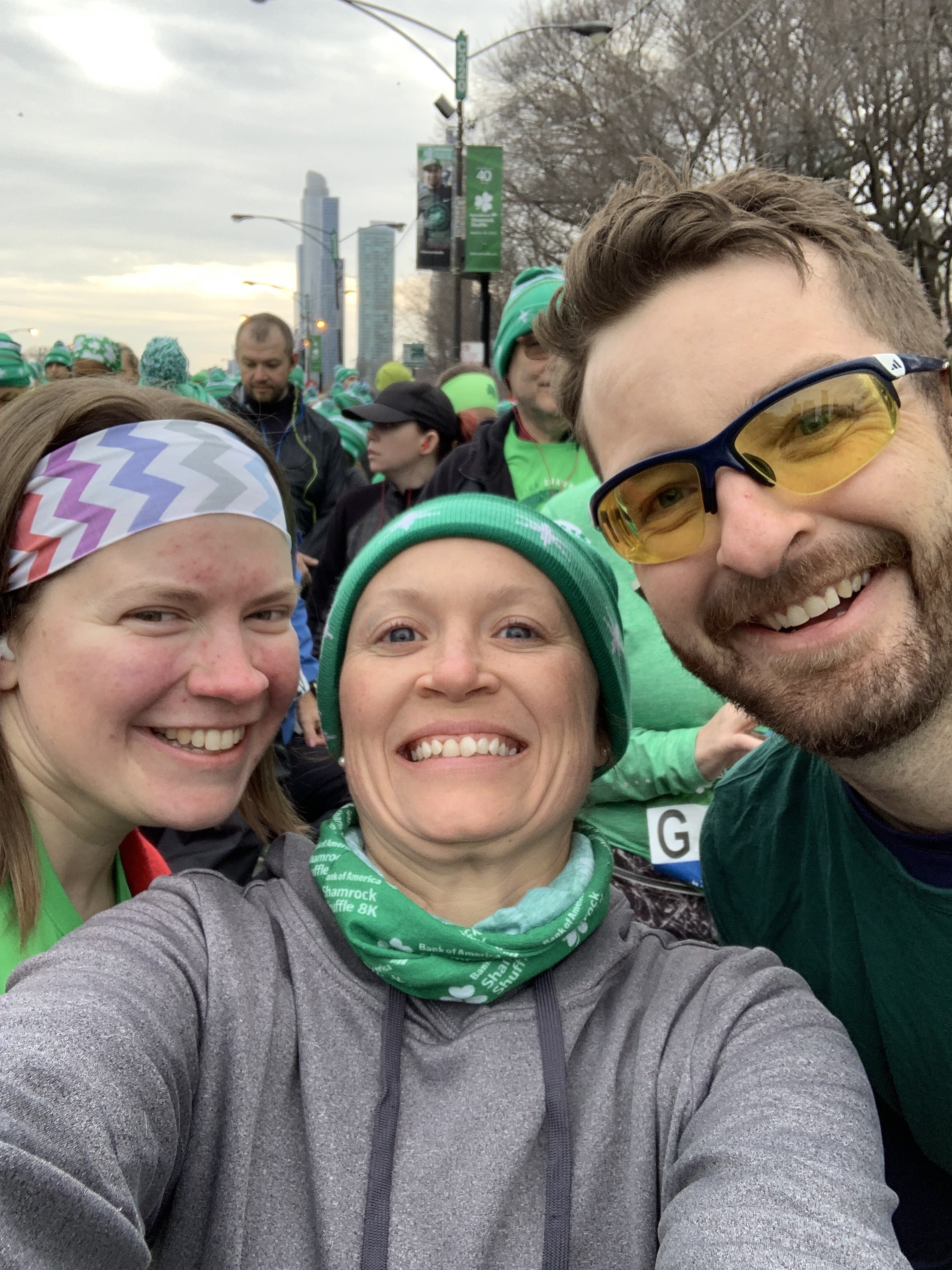
Old friends, but first time running together at this year’s Shamrock Shuffle!

From there, I was able to join one of the large marathon training groups in the city and receive coaching and a schedule for my fall marathon. I do my long runs with them every Sunday. Plus, there was all my new coworkers, people who I may not run with but I could certainly talk to about running.

With a more flexible schedule, I was finally able to start running with my neighborhood group. They had meeting for sometime, but it never worked out for me when I worked at the bakery. Now, I join them for their track workouts and meet up with some members of the group to do other runs throughout the week.

Now, I run half of my week’s workouts with people. I find that I am faster and more relaxed in my runs when I am with people, but then I still have those solo runs to unwind. I like having more runners in my life, and it gives me a chance to connect with other people who get the ups and downs of the sport in a way that my husband and non-running friends don’t.

My making running friends journey isn’t over yet, but I feel good about the progress I’ve made. I’ve had to be more vulnerable and put myself out there, but I feel like a member of the running community and that’s what I wanted.

Rest Day

My alarm went off at 5:30 a.m. this morning as it does most mornings. Despite not working a full-time job, my days are incredibly full with marathon training, working at the running store, my graduate assistant job, and school, so I need an early start. However, such a packed schedule is leaving me exhausted lately and that 5ish wakeup is getting harder and harder to make.

When the alarm dinged, I went into the routine debate: if I take less time for breakfast, I can sleep an extra 10 minutes, OR, I could do my run between work and meeting a friend this evening. I could feel my tight legs begging for a reprise, but a speed workout was booked for the day. This scheming and planning was wasting time, and I knew I needed to make a decision. Then, I pulled out my phone and looked at training schedule from last week. My last rest day was a week ago. No wonder why everything hurt. I reset my alarm for two hours later and turned over.

During my last marathon training cycle, which was in 2015, I ran four days a week with three off. That was an extra day than I done in the previous training cycle, but I thought more rest suited me. Then, when training for a half marathon this winter, I knocked the off days down to two, most often because I needed a break from Chicago’s unrelenting weather. For this marathon, I am down to one day a week. It wasn’t a big decision, and really one I didn’t notice when I was creating my plan, but I knew I wanted to have a strong training cycle and just one day made sense.

“Each person deserves a day away in which no problems are confronted, no solutions searched for.  Each of us needs to withdraw from the cares which will not withdraw from us.” – Maya Angelou

So far, one day is working well for me, but because I often have to rearrange workouts in my schedule, the rest days aren’t one consistent day, and sometimes I forget to put them on the calendar.

The expert advice is that we should listen to our bodies, but I don’t think I’ve ever really understood what that means. Like many women, especially female athletes, I’ve long had a complicated relationship with my body and have pushed and abused it for not being what I want it to be. My body and I, we don’t really talk to each other. I’ve gotten better tuning into it’s needs as I’ve aged, but I am still unsure if my body is telling me to take a break or my mind is trying to sabotage me, as it tends to do.

This morning, though, I am fairly certain my body was screaming, “BREAK!” Not just from running, but my crazy schedule. Unfortunately, I am not sure I will have a day completely free of school, work, and running until, I don’t know, graduation, but I can steal back hours for myself, including this morning.

Our society puts a lot of pressure on us to go, go, go, with messages that only those that work hard deserve sweet rewards. However, we aren’t built to push for forever.

Someone I follow on Instagram was saying how the grit and strive of sport is great, and while she has been chasing that for years, she wonders if it is not working for her anymore. I commented on her post that sometimes we need to take an “inhale moment”, in which we pause, breathe in the goodness and forget about producing and accomplishing. Having goals and working towards them is a definitive part of life, but it doesn’t need to be our constant goal. We need those rest days to remember why we are chasing those dreams and allow our bodies and minds to recover and be strong again.

Today, I am taking a full rest day. I still have to work, at both jobs, but I didn’t run this morning and I will probably take the train instead of biking to my job. I’ve got a big weekend of running ahead of me, and I want to work with my body to get there, not against it.

Are you resting today? How many rest days do you have in a training cycle? How do you like to spend your rest days, in running and life?

I Love/Hate Strava

A few months ago, I went on a social media cleanse. After a particularly tough day, I deactivated my Facebook, Twitter, and Instagram accounts. I needed a break from everyone’s highlight reels and comparing my worsts to their bests. I kept Snapchat for cute videos of my nieces and nephews, LinkedIn account because it’s not as a threat to my mental health like the others, and Strava to track my workouts.

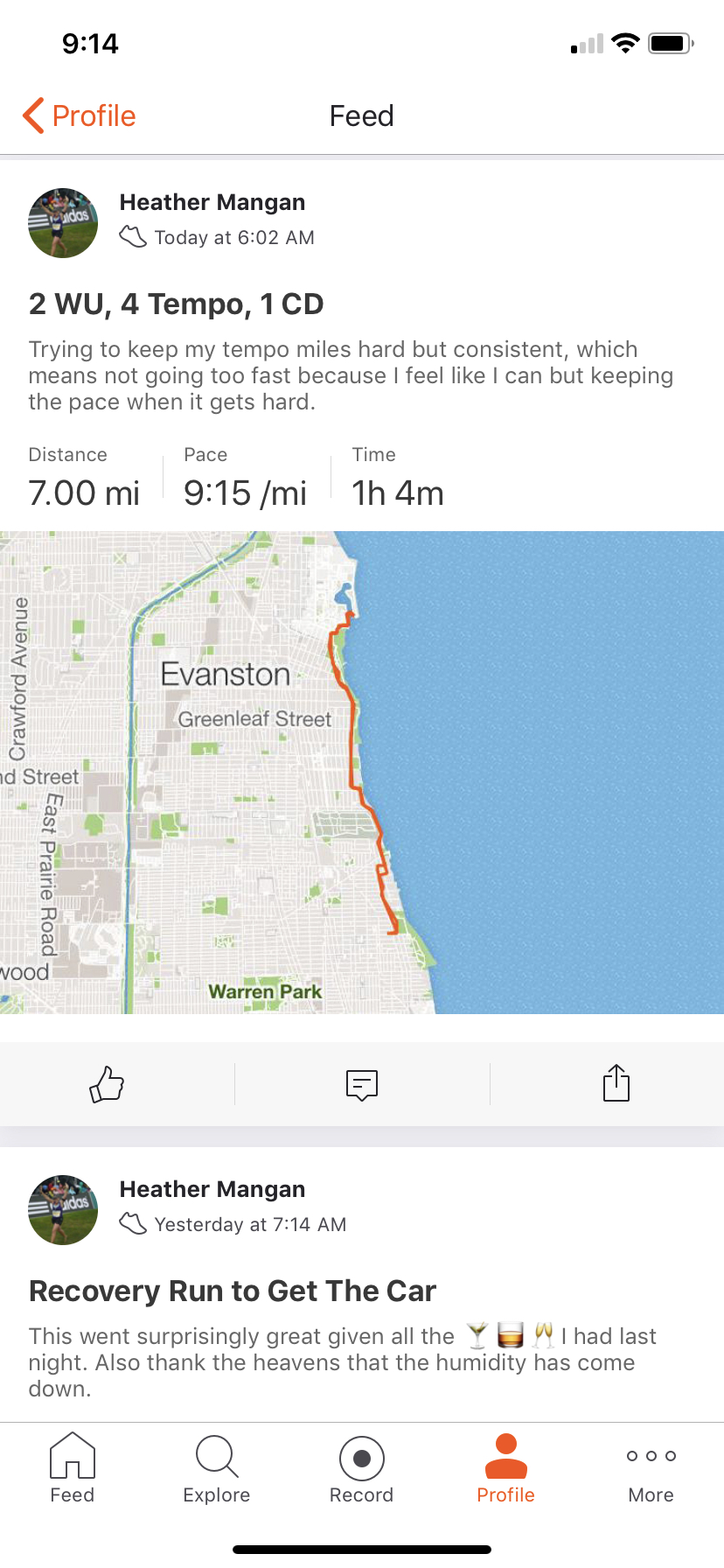
I created a Strava profile a few years ago, but it wasn’t until earlier this year that I became more of an active user. If you have never used Strava before, it’s like Instagram for your workouts. You can use the app to record a workout or sync your GPS watch and it captures numbers that describe your run. It’s incredibly satisfying, at the end of a run, to see that freshly published workout with all the data of pace and heart rate as well as the map of your route. Then, you get to sit back and watch the kudos, or likes, come in.

Not many of my friends use the social media platform, so a few months ago, I tried to find as many runners in the Chicago area as I could. I also found people’s whose blogs I’ve read for years and some of my favorite celebrity runners. I didn’t know most of the people I was following, but I loved watching their runs and learning about what kind of workouts they were doing. Strava also keeps tracks of how many miles you do each week, month, and year, and it’s a great confident-booster to see that number climb each day.

One of my favorite parts of Strava is seeing where people are running. In Chicago, the most common place to run is the Lake Shore Path, but I live a few miles from the trail, so I usually only go there when I am doing longer runs. For my daily runs, I do the same out and back along a pretty busy road, and it can get tedious. But, through Strava, I’ve been able to find alternative running paths, including trails and parks that I would have never thought to check out. My go-to place for tempo runs and hills is a park I discovered through someone I follow on Strava.

Through my training group and working part-time at a running store, I’ve started to meet many of the people I follow on Strava in real life in addition to making new friends and then finding them on Strava. The app even knows if you are running with someone and will automatically sync your posts, which is kind of fun when you are in a group run and don’t necessarily know everyone yet. I feel like I have a little community of fellow runners cheering me on after every run.

However, Strava is still a social media, and it comes with some of the same nasty side effects as Instagram and Facebook.

While it was fun to find more of my real friends on Strava, the beauty of following and being followed by mostly strangers is that I didn’t care what they thought of my runs. However, I am now more conscious of what my pace will record on the app and who will see it. Maybe it’s a friend who is a lot faster than me and he’ll think I am quite slow and “not a real runner.” Or, a friend I’ve been running with who is pushing me and she sees that my pace is slower than what we’ve been doing together. Will she be disappointed?

On some runs, when I am not in a good place, I will think mostly about how the numbers will look on the app and completely disregard how I am feeling. I put the post and how it will be perceived ahead of my fitness and health.

Also, while I enjoy seeing distances and paces, Strava was practically built for runners to compare themselves to others. We runners already do that, but it is more accentuated on the app. I am constantly scrolling through friends’ activity logs to see how they did in a specific race, what their typical heart rate is, and how many miles they’ve done this year. And, that’s when I sink into the comparison despair.

I am not fast enough.

My heart rate is too high.

I am not going far enough.

The other day, I had just finished a long run and was feeling fairly good about it. I logged my workout to Strava, and then came back to the app a few hours later to see my kudos and what other people had done that day. One post was from a woman who I have never met but are connected through mutual acquaintances. We are running the same marathon in October and our paces are fairly similar. Her long run that day was several miles more than mine, as was her weekly mileage. I started to panic that I wasn’t doing enough and that my training was maybe too easy. 

This self-doubt lingered for a few hours, and this is why I have a troubled relationship with Strava. If it wasn’t for the app, I wouldn’t know anything about her training, nor would I have any reason to compare it to my own. I have lots of friends who are faster and run further than me, and their harder workouts don’t seem to bother me, but when someone is right at my level I automatically stack her against myself. It’s practically habit.

Training for a marathon by judging yourself next to someone else’s paces and mileage is a really crappy way to train for a marathon. Someone else’s running is not my running, and if I continue to fixate on where I am compared to others, I will burnout or, worse, end up injured. Running will lose its joy, and I will be chasing numbers, which again is a really terrible way to train.

Sometimes we have to remind ourselves that numbers are just half the story. The other day, I had a great run in which my pace was dropping each mile, but two different times I forgot to pause my watch when I stopped for water and at a red light. My overall pace was slower because of the elapsed time, however it wasn’t reflective of how hard I worked. We can go ahead and publish our run data to Strava or Instagram, but we are the only ones that know what that felt like. And that goes with others. Just because someone ran seven miles at 6:30 pace doesn’t mean it was a great run.

Because I do really like Strava, I am not reading to give up on it. Yes, scrolling through on a Sunday morning can cause me to question my own training and abilities, but that is on me. I can still be on Strava but put up boundaries to not let it define me as a runner. That will take some self-esteem work on my part and a remember that numbers are just numbers and progress can also be felt. In the end, what matters more than the data posted is that I keep showing up day after day.  

I want to hear from you! Do you use Strava? Do you like it? Also, let’s be friends!

#SeenOnMyRun

Definitely enjoying the sunrise and not thinking about how much I want a burrito.

I don’t take many photos when I am out running. With the popularity of Instagram runners and Strava, there is a great incentive to snap a quick pic to prove the workout, but I usually don’t. This is mostly on purpose.

When I am running, I am usually trying to accomplish something. There is a tempo pace or distance I need to hit, or perhaps I am crunched for time and need to get home so I can shower and move on with my day. Running is work for me, and I take most of my runs too seriously. I don’t want to tamper with my workout by stopping to take a photo of a good sunset or pretty flower. I need to keep going, keep pushing, and remember the task at hand.

One of the things I love most about running, though, is that it is an excuse to be outside. Even in the rain, I enjoy running under treetops, next to the beach, on trails, wherever Mother Nature has welcomed me. Running is also a great way to experience a new place, while on vacation or traveling for work, and it’s certainly how I like to enjoy old places that I am returning to after being away.

What happens when I am pushing through workouts, looking at them as work, is that I don’t actually enjoy my surroundings. I am too focused on my watch and what I think I should be doing that I miss the deer quietly watching me from afar. Or, I have my music blaring so loud in order to give me enough motivation to get through the run that I don’t listen to the songs of the birds. I am not in the moment, rather trying to make time move faster to get through it and then brag about it on social media.

This image has an empty alt attribute; its file name is img_7253-e1562334137268.jpg

I realized recently that taking pictures while on my runs is actually one way to stop and take in my environment. Sure, I have to pause my watch and it will take a few extra minutes, but when I stop thinking about times and paces I can appreciate it is that I get to watch the sunrise above the city while everyone else is still in bed. I made that specific choice, and it doesn’t need to be all suffering.

There is a way to overdo the seen on my run photos. Stopping every run, especially during the ones that call for speed, seems unnecessary. And, I know that I don’t need to take a photo to enjoy the moment, but the act of taking the photo is a good reminder that I can slow down and remember why I run at all.

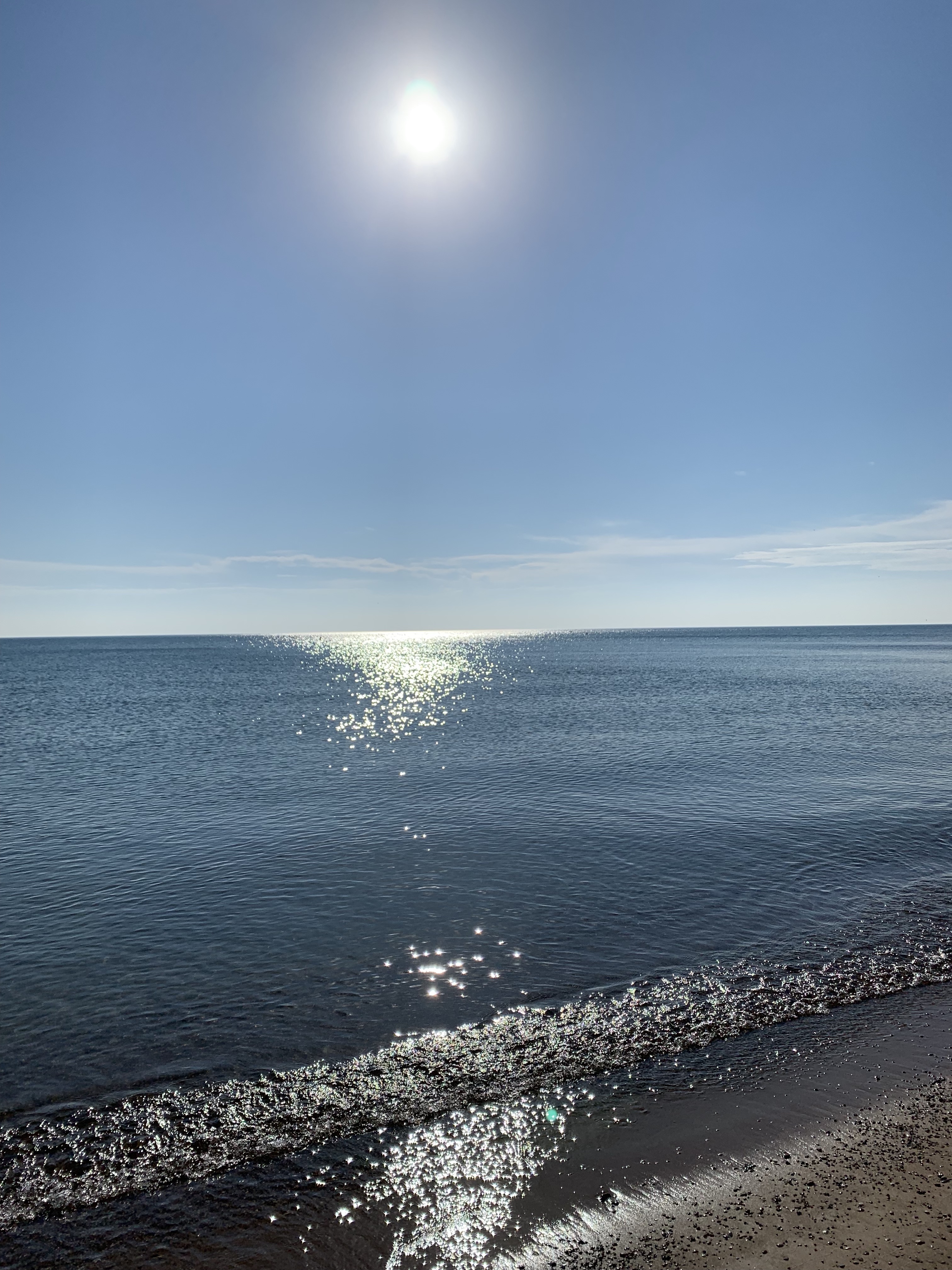
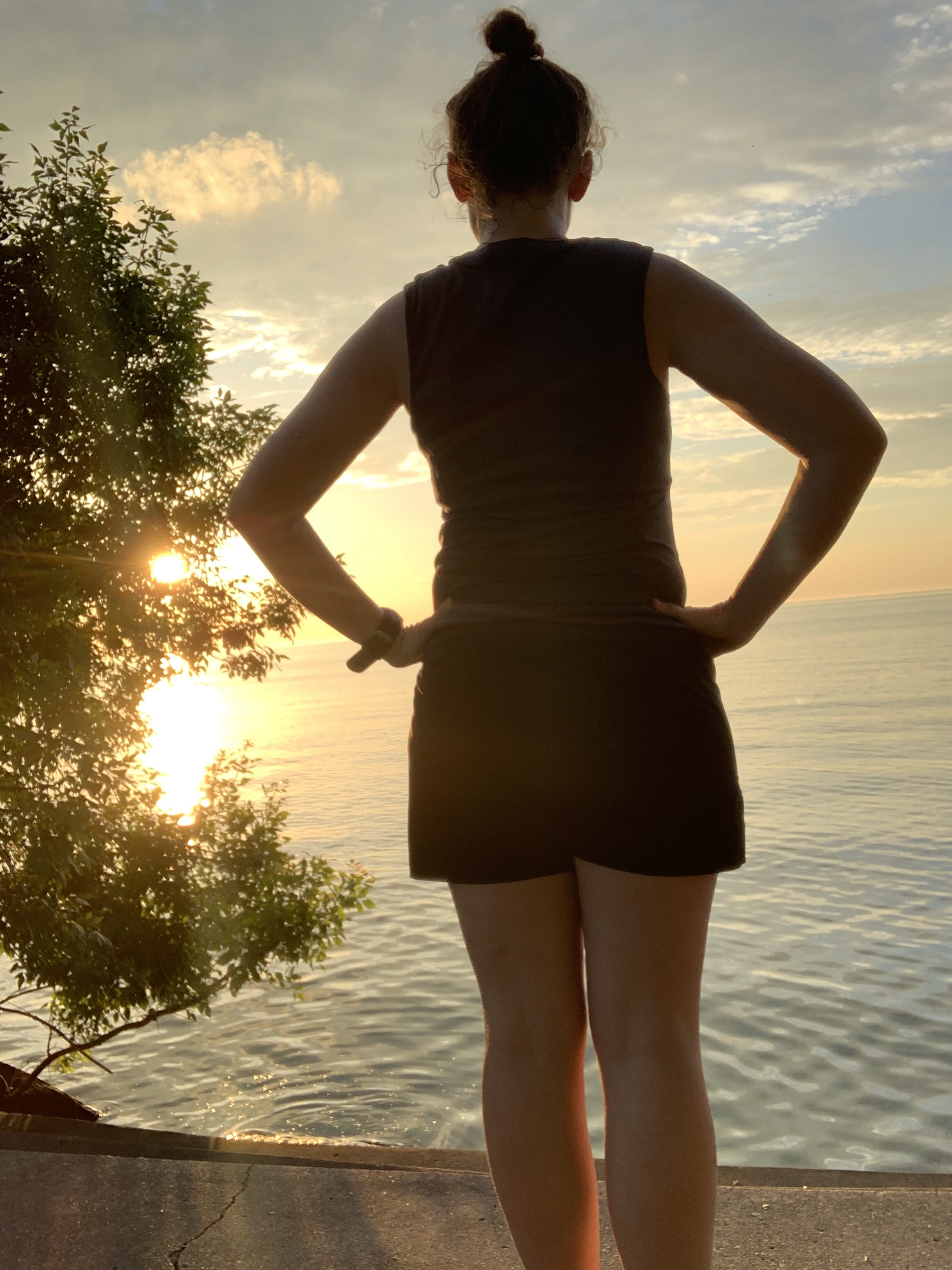
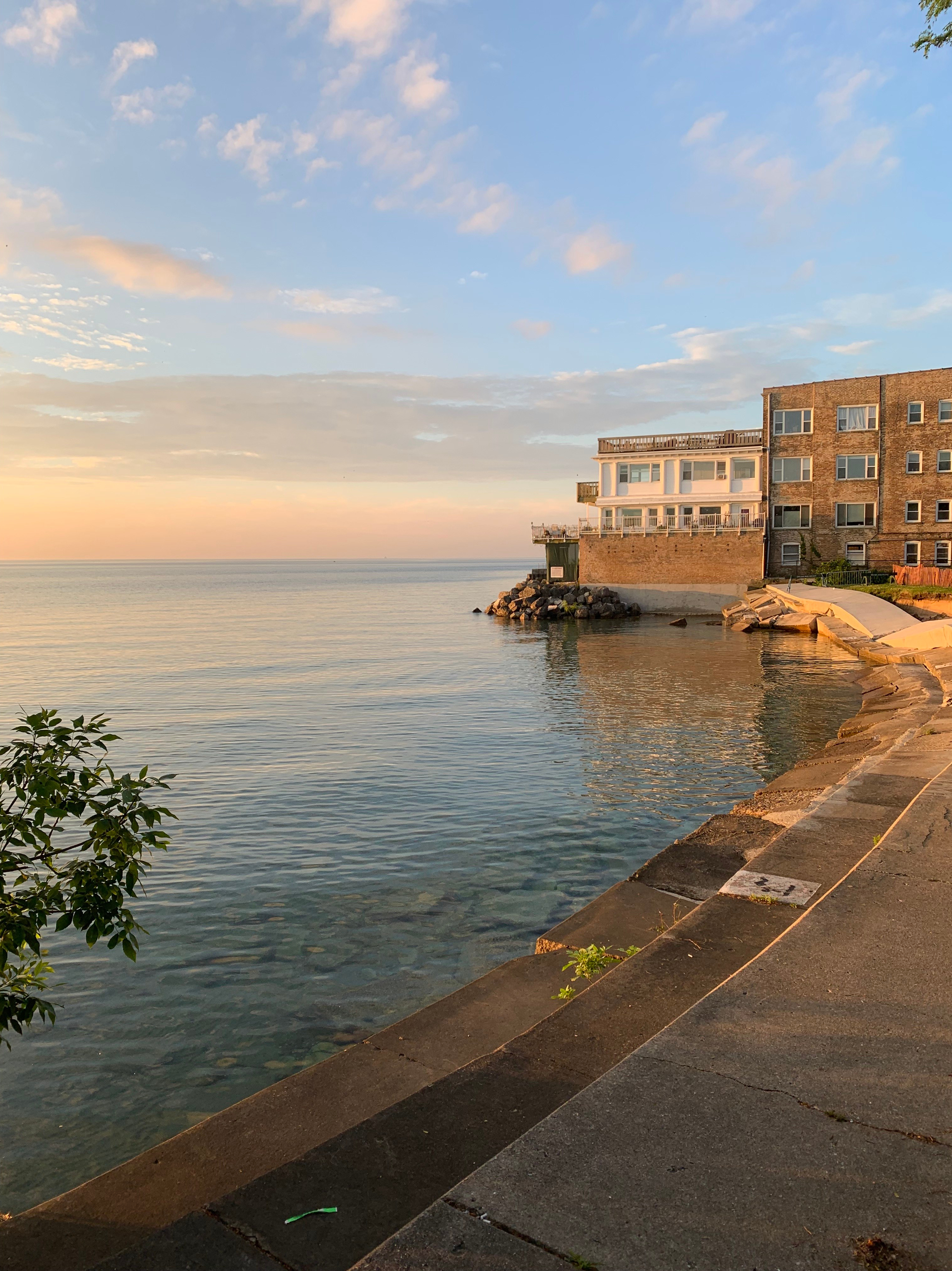
This morning, I was up at 5:30 to beat the heat for my run (spoiler alert: it was already hot and humid at that hour). Because it was the day after the Fourth of July, it was fairly quiet. The sun sparkled as it rose over Lake Michigan, and I thought about how lucky I was to see this everyday miracle. Instead of just running past it, I wanted to take it in. To really see it and thank it for being there. I snapped a few photos, took a few breaths, and was on my way. I also turned off the podcast I was listening to take in the stillness of the morning.

This was very much worth getting up at 5:30 for.

I want to take more photos on runs, not to become an Instagram runner (although you should follow me), but in order to get out of my own head and to really appreciate how great our world is. Running should come with goals and work, but it should also bring us closer to all the good things in life. And, we can’t get there if we aren’t living in the moment.

The Holiday (red, white and) Blues

Image result for Fourth of July Party Pictures
Source

Around the December festive season, there are tons of articles, tips, and resources for those experiencing the holiday depression. It’s a triggering time for people as they recap on the losses from the year, reminisce holidays that were merry-less, and try to maneuver fraught relationships with family. What we forget, though, is that there are other holidays that can cause an onslaught of emotions.

For me, it’s the Fourth of July.

I know that seems weird, like, who doesn’t like the Fourth of July? All you do is eat hotdogs, watch fireworks, and go to the beach. First, I don’t eat hotdogs (unless they are vegetarian), but it’s not that I am not a fan of Independence Day. Rather, I feel the pressure to have such a star spangledly great day that I end up disappointed and discouraged. You know, like the way many people feel about Christmas.

Image result for fourth of july party
Source

Growing up, we weren’t allowed to have fireworks. When my dad was a kid, his neighbor’s roof caught fire because of some stray fireworks, and the event scarred him so much that he refused to let us get some, other than a few smoke bombs. We spent most July Fourths watching other kids delight with glee as they shot off bottle rockets and fountains.

As a teenager, most kids in my town celebrated my drinking cheap beer on a sandbar on the Missouri River. I was never invited to these parties, and although I pretended that I didn’t care, I would have certainly got on a boat if someone offered to take me there.

From there, the mid-summer holiday was a measurement to see how my life is measuring up to those portrayed in advertising or Instagram. A successful Fourth of July meant that I was at the beach, surrounded by tons of my best friends, drinking beer, eating charred food, and wearing red, white, and blue. In the last five years, I’ve had just one Independence Day like that, and although it was a really great day, I’ve felt lonely and ashamed every other holiday. Last year, my husband and I spent most of the day indoors packing for a move to another apartment, and I ended up in tears because no one had invited us to a barbeque, which surely meant that all of my friends decided to hang out without me and that they no longer like me.

Riiiiight.

Image result for Fourth of July Party
Source

Social media and other forms of media paint the perfect picture of how we are supposed to live, not just on holidays but basically any day, and it’s quite easy for us to believe that our lives look slightly different than we are doing them wrong. But, that’s just not the truth.

Holidays come and go. Some years will be terrific, and they may look close to what we hoped they would be, but others will not. You may spend them alone, or they’ll have less glitz and glamor, but they have nothing to do with yourself worth. Your life, and all that it contains, can’t be boiled down to one day, so we can’t expect to have the perfect holiday every year.

I know that the Fourth of July is a triggering day for me, and so I can prepare. Some years, I try to make plans with friends, but if it doesn’t come together, I don’t force it. Like this year, I was invited to a barbeque at a friend of a friend’s house, which sends my social anxiety into overdrive, and I have to ask myself: am I going because I want to or because I feel like I need to be at a barbeque? Probably the latter.

Also, I can let go of expectations. I can still have a good Independence Day at home with my husband and our dog (who is terrified of the fireworks, and I am not sure I even feel comfortable leaving her home alone) even if it doesn’t like the Fourth of July’s from TSwift’s Instagram account.

Instead of being disappointed that I am not on a yacht with a bucket of beer, I am going to thoroughly enjoy the day given to me. I am going to run a race, Skype with an old friend, and take a long deserved nap. Maybe I will go to the beach or watch some fireworks, but maybe not. I am in control.

Holidays are a good time to remind ourselves that we don’t have to be perfect nor live up to the shoulds. We are in charge of our lives, not idealized expectations. For me, the Fourth of July, will be good practice for loving the life in front of me and letting go of all comparisons.

How are you celebrating the Fourth? What could you let go of this Fourth?

The Courage to Start

Most of us runners have had friends and family say, “Oh, I could never run.” They are too fat, too slow, too busy, too out of shape, too afraid, or so they say. However, we know those are just things we tell ourselves to justify our reasons for not doing something. We know, because we’ve been there.

All runners have to start somewhere. Some begin running later in life in attempt to lose weight or improve their health. Some started running as kids and ended up on track and cross country teams. Others took that first run with a friend not knowing how far they could or would go. Starts can happen intentionally or accidentally, and they can occur over and over.

I’ve been running since I was 12 years old, but not consistently. I’ve taken months-long breaks because of life, injury, and laziness, but eventually the urge to run returned. That first run (or really, runs) were not fun. I slogged through slow miles with my knees and sides aching. My fitness was certainly gone, and all the reasons I had avoided running for several weeks seemed justified in those beginning steps. But, I also knew that if I could come out the next day and the day after that then I would reconnect with the love of running. The euphoria and endorphins would again consume me, and I would be smitten.

And that did happen, every single time.

We all have goals that we want to accomplish — run a marathon, change careers, buy a house, write a book — and while the end results seem glorious, the path to get there is daunting. And, when you are looking up a mountain, it’s hard to find that bravery to take the first step.

But, we can’t get there if we refuse to start. The joy, the love, the glorious success will remain figments in our imagination unless we begin.

Yesterday, I went to see a new therapist. Just like running, I’ve been in and out of counseling since I was a teenager, and I was seeing a regular therapist up until last November when I lost my health insurance. In that time out of counseling, my mental health has taken a nose dive, and I’ve been in a pretty dark spot for a few months. As humans, we tend to linger in the negative. It’s an easier, comfortable spot for us, and as someone with depression and anxiety, it’s more familiar to me than joy and happiness. So, when I am there, it’s hard to get out.

Yet, that’s not how I want to live. I want to control my mental health, not the other way around, and to do that, I need help. Reclaiming my mental health isn’t a quick fix, but a long journey of processing thoughts and emotions and filtering the truth from the false. Starting back in therapy feels like training for a marathon without any specific end; it will be a long painful journey but I can’t find content unless I start.

The first appointment, like the first run after a long break, felt a bit awkward, almost as if I forgot how to do this. But then I warmed up, and by the end, I had re-found that high. Not all of my session will feel this good, I know that, but I am not in this for the quick high. I want the long-term benefits, and so I am willing to give it my all week after week.

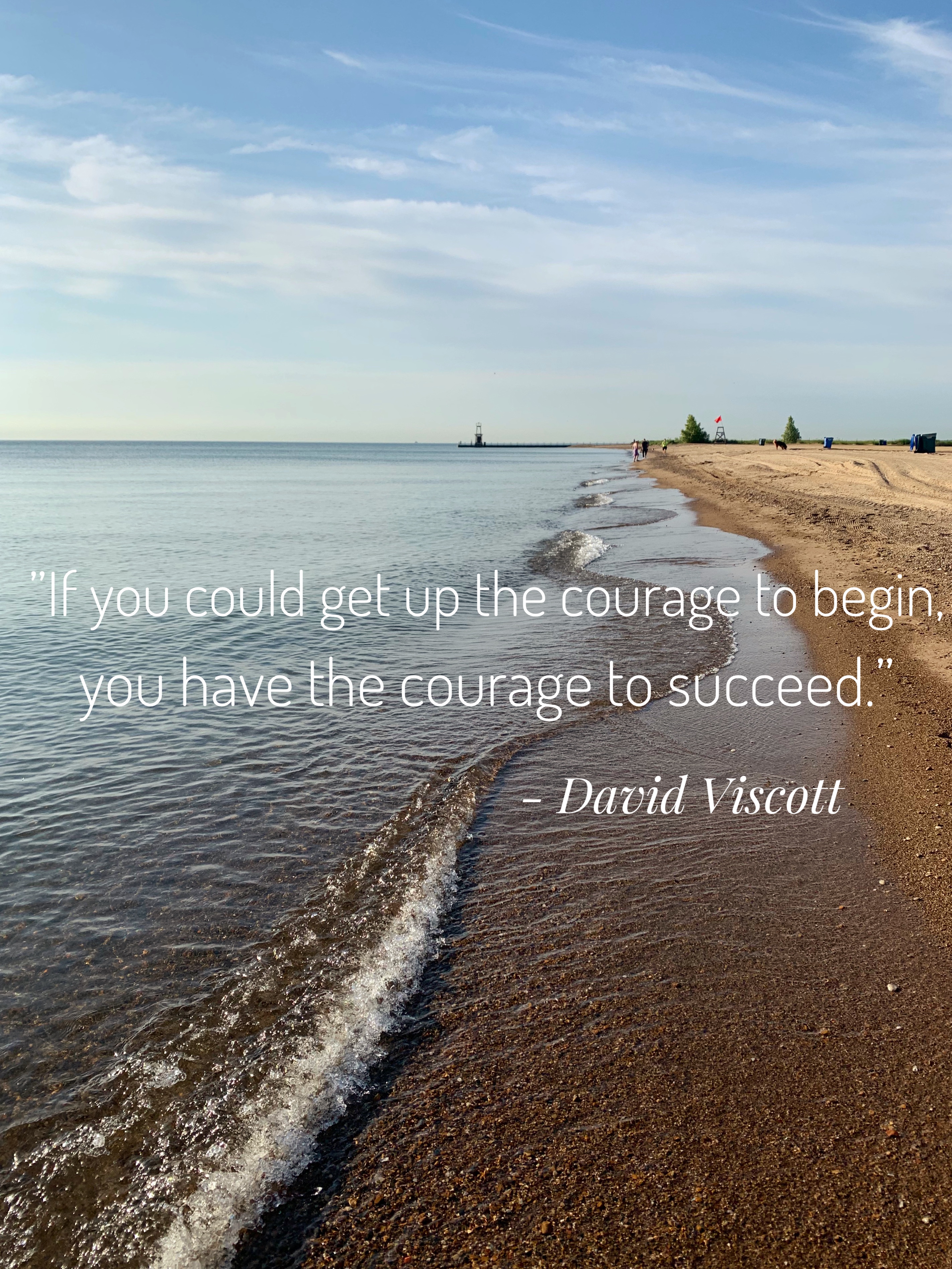
We often think we can’t start until we are ready. We need more of this or that, or we should wait to begin after such and such. The truth is, now is as good of a time as any to start. You don’t need anything more than what you at this moment but rather just the courage. From there, you can figure out the rest.

It Hurts

Image result for running hurts quotes

Often, when you are running, you experience pain. Sometimes it’s sharp,
maybe in your knee or calf. The body likely needs rest, stretching, or
examination by a doctor. That’s the kind of hurt that shouldn’t be ignored nor one you should push through.

There is another kind of pain, though. It’s achier, and it lingers. It is
harder to find the source of this ailment, meaning there is no quick fix. All
you can do is keep going and hope to forget about it long enough that it dissipates.

Running hurts. That is a fact. Yes, there are times when we are injured, but
there are also times when your body is just going to hurt. This is a kind of
pain that we all experience, no matter how long we’ve been running or how fast we are. We have an off day, our calves are tight, or we ate something that our stomachs don’t agree with.

It’s important part to know what is injured pain and what is just running
pain. A few years ago, on the Saturday after Thanksgiving, I went out for a run to shake my legs out from a Turkey Trot. I noticed pain in my right hip, a sensation that I knew almost immediately was more than wear on the body. Of course, I was in denial about it and didn’t get it check out for months later, but I could tell it was the type of hurt that would likely need medical attention. Eventually, I learned that it was a labral tear, and I had to have surgery to repair it.

Today, though, I had some pain in my left glute. This was different that my hip pain. It was more of a soreness. I knew that I just kept going, the issue would likely work itself out and I would feel better. Five miles later, the pain was lingering but definitely better. Some active foam rolling and I should be good.

We have these kinds of pains in life as well. Hurt that is deep and
unrelenting, that has followed us from year to year, that needs to be addressed with therapy and inner self-work before one can heal. And, hurt that is part of life’s normal ups and downs.

Right now, I am in graduate school. Something is always due, and I doubt if
I am actually retaining enough information to be a competent counselor. Also, money is tight. I left a good paying job with benefits to pursue my master’s, and while I stopped earning a steady income, the world didn’t stop demanding money from me. I work two jobs to pay my bills, which is barely enough and leaves me little time to do that homework let alone have a social life. These days can be really hard, and the finish line is so far from my peripheral that I am not entirely sure it is there. However, this is part of the process. Graduate school is not easy, and nearly everyone I know who has done it has had some excruciating days. But, this hurt is part of the process, and it’s different from the one a year ago when I was extremely unhappy in my career and knew I needed to change. That unhappiness needed to be addressed, which is why I quit my job and enrolled in school. This one, though, needs to be endured by acknowledging it, learning from it, and continuing on.

It’s not always easy to understand the differences in pain, in life or
running, and sometimes we’ll keep going when we shouldn’t or quit before we should. Those aren’t mistakes, rather lessons to help us better understand ourselves. (Note: Be very careful about continuing on when you are experiencing emotional or physical pain. It’s OK to consult a professional while deciding to continue, and remember your health should be the number one priority.) When something is really wrong, quitting or stopping is necessary, but it can also feel like an out when you are experiencing the just because pain. It’s tempting, for sure, but it might not be the right answer. It’s up to you to determine what is best.

Enduring pain, when it is the just because kind, is part of the process. Nothing with great accomplishment is easy, and so we must put up
with the trials to get to the finish line. However, that strength is in us. You
can’t ignore the pain, but you can not dwell on it. Rather, find that strength
and rise above it. Eventually it will disappear, you’ll see that finish line,
and overcoming the hurt will be one of the highlights.

The Mile

Related image
Source

On Thursdays, I run with a local training team, and today’s workout was centered around a timed mile. As the coaches explained it, this mile would help give us a good idea of what pace we should be doing our other runs, and more importantly, act as a measurement of our progress. In the fall, we’ll do another, and if all goes correctly, we’ll be astonished at how faster we’ve gotten.

This mile test scared me. My strength as a runner (and also when I was a competitive swimmer) is endurance. I am not quick, but I can keep strong paces for several miles. This spring, when training for a half marathon, some of my speedier miles were at the tale end of 10, 13, and 15-mile runs. One fast mile? I wasn’t sure I could work up enough acceleration to produce a time I was proud of. Which was another source of anxiety. I feared that my mile time would show that I should be running my long runs at a slower pace and that I’ve been tampering with my ability to run a good race by going to hard in my workouts. Lastly, I don’t have much experience with a timed mile. The last one I did was when I was a junior in high school during track.

Let me talk about track for a second. I hated it, but I knew it was the only way to keep up my fitness for cross country season. For the long distance girls team, I was the slowest runner, which meant that my coach, Mr. Gusso, paid me no attention. I cried after every race because I wanted to be better than I was, but my times got slower. (“Girls times always get slower,” Mr. Gusso told me. Cool guy.) I specifically remember running that mile race as a junior, because I was planning not to go out for the sport my senior and I was thrilled that it was my last one. Never again, I thought, until I decided to be all sporty and join a local running team and they were like, “hey this will be fun” and I wanted to give up running for forever so I didn’t have to do this dumb thing.

Can you tell that I was in my head just a bit?

For at least 24 hours before the workout, I thought about skipping the group and doing it on my own. By myself, I could do it on the Lakefront Path or in loops around a nearby park. Without anyone else nearby, I wouldn’t be as ashamed at the time on the clock.

This happens to us a lot when we are scared, of both little and big things. We try to bargain our way out of doing something hard because we are afraid of failing. Instead of skipping the run, I started to question why I had the urge to do so. So what if I didn’t run as well as I wanted? How would that change my attitude towards running or myself as a runner? What importance does it really have?

Hardly any.

The truth is, it didn’t matter how fast I ran that thing—above or below an arbitrary goal—because I would go home that night, eat a cookie, and go to sleep. Then the next morning I would continue on with my training.

When I questioned my fear, it lost its power. Sure, I was still nervous when I toed the line, but I knew that it would be over in less time than it takes to wait for the bus.

A big inspiration was the other runners. They divided us into groups, and because I was in the second group, I watched from the inner field as the others completed the trial. Some of these were veteran runners, but many new. They were of all ages and sizes, but they were doing it. For them, the time was irrelevant. Rather, it was just accomplishing the goal. If they could look at the mile and devour it, so could I.

And, I did. The first loop hurt my lungs, but my pace quickened in the second loop. I settled into the third, and by the fourth, I couldn’t believe it was almost over. I recorded a 7:32 pace, which is good for me and doesn’t need any comparison.

From Glennon Doyle Melton

Running reminds us that we can do hard things. Sometimes that’s run a mile, sometimes that’s run 26 miles. While challenges in running seem minuscular compared to those in life, like divorce or the death of a loved one, our spirit and strength in overcoming them are built of the same materials. In running, we understand our courage, and if we can muster it up to run a fast mile that makes us nearly vomit, imagine what we can do when life breaks our heart.

That’s why I showed up to the run today. Overcoming this little fear and giving that mile my all is good practice for other challenges, and when they come, me and my 7:32-mile will be ready.