I Will Never Run Boston

Image result for boston marathon
Photo Credit

Most Americans will say that the biggest day in sports is the Super Bowl. Or, Opening Day. Maybe even the final round of the Master’s.

To me, though, the greatest display of athletic competition comes in April, on Patriots Day, or as we runners call it, Marathon Monday. 

In long distance running, the Boston Marathon is the most celebrated and anticipated race of the year. Sure, there is New York and London, but the history of the marathon is embedded in Boston. It’s the world’s oldest marathon, and it attracts nearly 30,000 runners and 500,000 spectators annually. Even if they have not raced it themselves, most runners know about Boston. They know about the bus to Hopkinton and the finish on Bolyston Street. They’ve heard tales from the Scream Tunnel and Heartbreak Hill. After the tragic events in 2013, the Boston Marathon also represents reliance, with survivors and loved ones of those lost, taking on the race and reclaiming their strength. And, wins from Des and Meb have inspired us all to keep showing up. It’s the year’s biggest day in running.

It’s a dream come true to run the Boston Marathon, but for the majority of runners, that dream stays in the air. Because of the event’s prestige and popularity, the Boston Marathon imposes fairly fast qualifying times. For a male between the ages of 18-34, one must race under 3:00. For women, that time is 3:30. Those times are often lowering as more and more people are able to meet the standards, but even if you do make the time, entry is not guaranteed. There is fewer spots than qualifiers, so they take the fastest times and apologize to everyone else.

Image result for boston marathon
Photo Credit

This year, I will turn 35, which means I jump to a new age division. My qualifying time for the next four years is 3:35. The last marathon I ran was 4:50. While, I expect to shave a good chunk of time off in a fall marathon, it will likely not be 75 minutes. I probably won’t even come close to breaking four hours.

Yes, I want to run Boston. I want to feel every grueling step of that remarkable race. I want to cross that blue finish live. I want to buy blue and yellow swag that I can wear while running Chicago’s Lakefront path so others know that I am one of those, a Boston runner.

The truth is, though, that I will likely never make it to Boston. Even if I get faster and am able to continue running for the next few decades, it will likely be something I can’t accomplish. That’s not just the runner that I am. This does make me sad, but it’s something I’ve come to accept.

Just because I or other runners like me won’t likely be fast enough to run Boston doesn’t mean that we can’t have other racing goals. We can still do incredible things with our bodies and make our own running history. Maybe we decided to run a marathon in each state or join Marathon Maniacs. Or, we create our own marathon course or make up a “Bucket Race List” and start knocking them off.
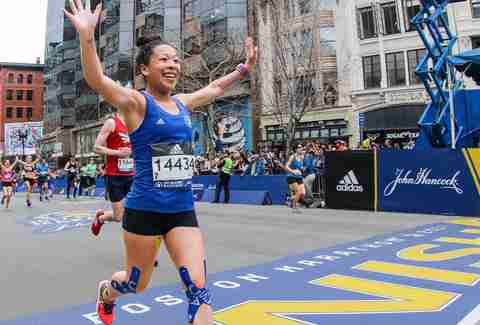
Image result for boston marathon
Photo Credit

The Boston Marathon is a metric for many runners, but it is not a definitive. Being able to run the race doesn’t mean you are more or less of a runner. It’s just simply a cool event that happens each year, and if you can make it, great. If you can’t, you can still be a badass runner and enjoy the event for what it is. 

Running Boston may be your goal, and I’m sure you will put the work and determination in to make it there, but it’s OK if it’s not your goal. It is the biggest race in running, but it may not be the best and it is definitely not the only. Running is steeped in tradition, but it’s made up of perseverance. Set your own goal, find out what you are made of, and you’ll be a runner.

Also, never say never.
The Start Line

Here it is, the first post of the Running Therapist blog. Welcome! I am really glad you are here, no matter what journey brought you to my corner of the internet.

So, who is the Running Therapist and why do they think they need a blog? Short story: My name is Heather (she/her pronouns), and I am a writer and runner and currently in graduate school to become a therapist.

All three of these things—running, writing, and counseling training—are a thriving force in my life, but they seemed separate. Different entities demanding my attention. I wondered if there could be a space in which I brought them together, fueled all of my passions and carved my own space?

Long story: I started blogging in college as part of an assignment for one of my journalism classes, and I really enjoyed the format. As a young reporter, I found blogging as a good outlet to pound out my feelings while practicing my writing. The blog complimented the work I was doing in my 9-5. When I was 25, I joined the Peace Corps and blogging was not only a useful tool in sharing stories with friends and family back home, but it was a source of comfort when I was feeling like a stranger in an unfamiliar place. I continued blogging back home, but after my Peace Corps service, my posts lacked focus and purpose. At this point, I also started to write more for publication (mostly unsuccessfully), which after a while started to pushout the joy of writing. For some time, I’ve been wanting to realign my writing with blogging, finding a new forum to sink my teeth in and a community where I can grow.

In 2018, I made a big change in my professional life. I decided to my leave my job, change careers, and go back to school to become a therapist. This fall will mark the beginning of my second year (of three) of graduate school. Counseling is a tough profession, but it’s one that I’ve been called to pursue for decades. My life’s goal is to help others feel not alone, and therapy has made an impact on my life. However, there were always reasons not to become a therapist. Eventually, I stopped running out of them, or they just had less power over me than previously. I knew that I would one day regret not trying to become a counselor, so I redirected the ship. 

While I love being a student again, it comes with some undeniable stressors. Running is one of the best medicines for stress. The year before I went back to school, I had hip surgery to repair a labral tear, and the recovery was brutal. Running had been a mainstay in my life since I was 12—seeing me through job decisions, breakups, moves, loneliness, anxiety—but several months after the surgery, I wasn’t healing the way I expected. I thought that I might not run again. The body is a miraculous thing, and eventually mine strengthened and I was able to run again. First for 20 minutes. Then 3 miles. Then 8. 10. 12. 15. I was a runner, again.

Soon, I was enamored with running. The only books I read, outside of textbooks, were ones related to running. I browsed running stores and watched clips of Des and Shalane on YouTube. All I wanted to do was talk and consume running.

I used to love running blogs. Whenever I was training for a race, I would check them daily, devouring race reports and workouts. They were a fun way to feel like you were running with a group, even from afar. But, these days, most running blogs have gone quiet. Former bloggers have adopted new platforms, like podcasts, or moved all of their content to Instagram or Strava. That stuff is still motivating, but I miss real, thoughtful blogs.

Thus, The Running Therapist.

But this blog is more than a selfish combination of all the things I enjoy. It’s a deeper look at the connection between mental health and exercise. In these posts, I will pull apart the lessons from both and how they can help us grow and find out way in the world.

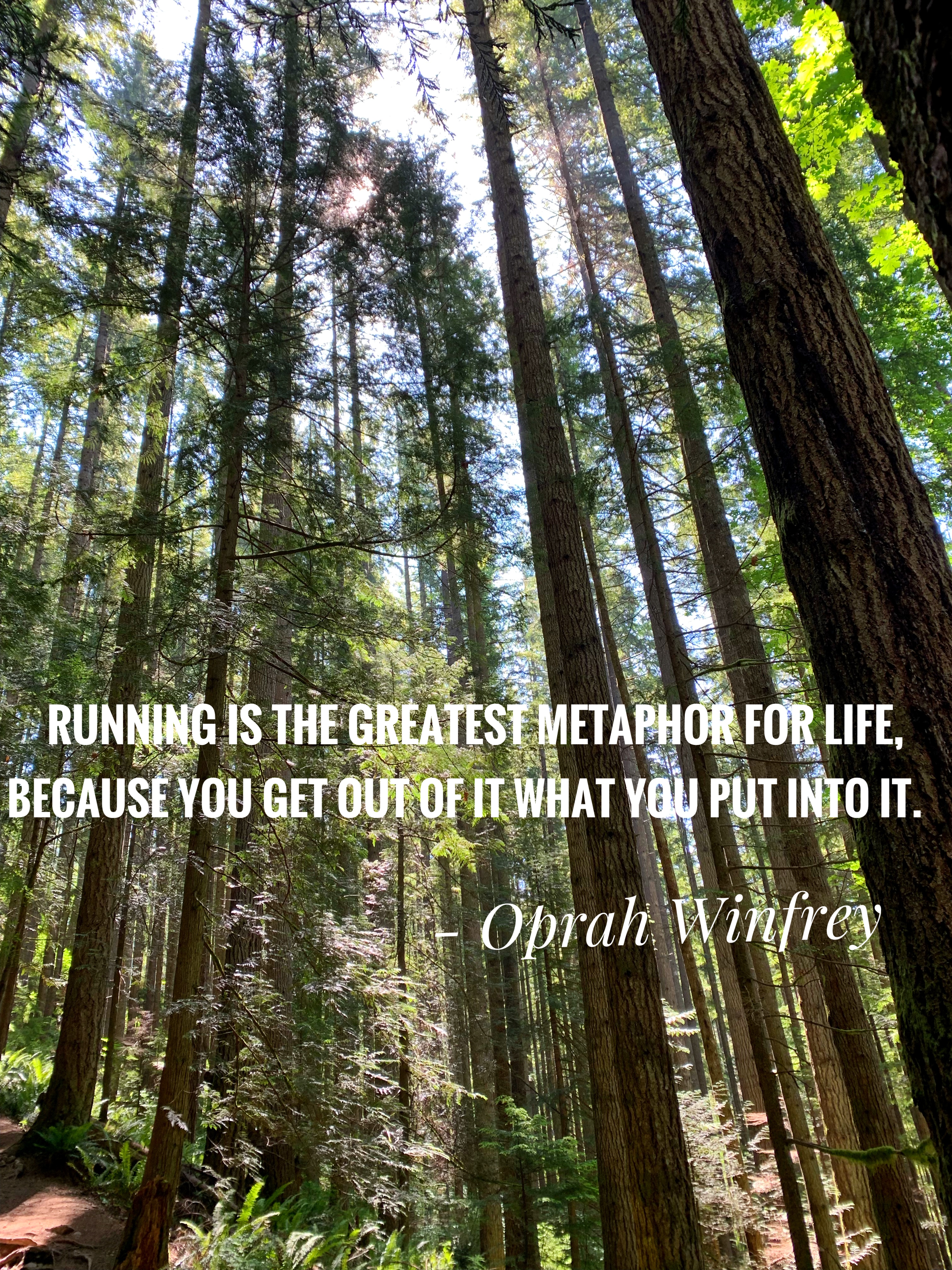
Many people will say that running is their therapy, and as Oprah once said, running can be directly related to many things in life. From running the mile you are in to taking your rest days, running is full of good life advice. I want to explore that while uncovering some harder truths about mental health and running. 

It’s important to note that I am NOT a licensed counselor, and that my comments here are NOT meant to be therapeutic and medical advice. Please know that I am a student, learning as a I go, and am only sharing my thoughts to help those that may have similar ideas.

Also, let’s get this out of the way: I am not a special runner. I am not particular fast nor have I overcome great adversity to run. I just run because it makes me feel whole. I hope to share parts of my running life, but I am not a pro or coach. Just in case you wanted to compare times here.

Again, thank you for joining this journey, and I hope you will contribute your own ideas and thoughts in the comments section. Let’s bring back running blogs and fight mental health taboos.

Onward.